St. Joseph’s Cathedral Parish
- Pastor: Fr. Gordian Opera (gorddy02@yahoo.com)
- Parish Council Chair: Luke Leclair (luke.leclair111@gmail.com)
Box 107 Fort Smith, NT X0E 0P0
Parish Phone: (867) 872 2052
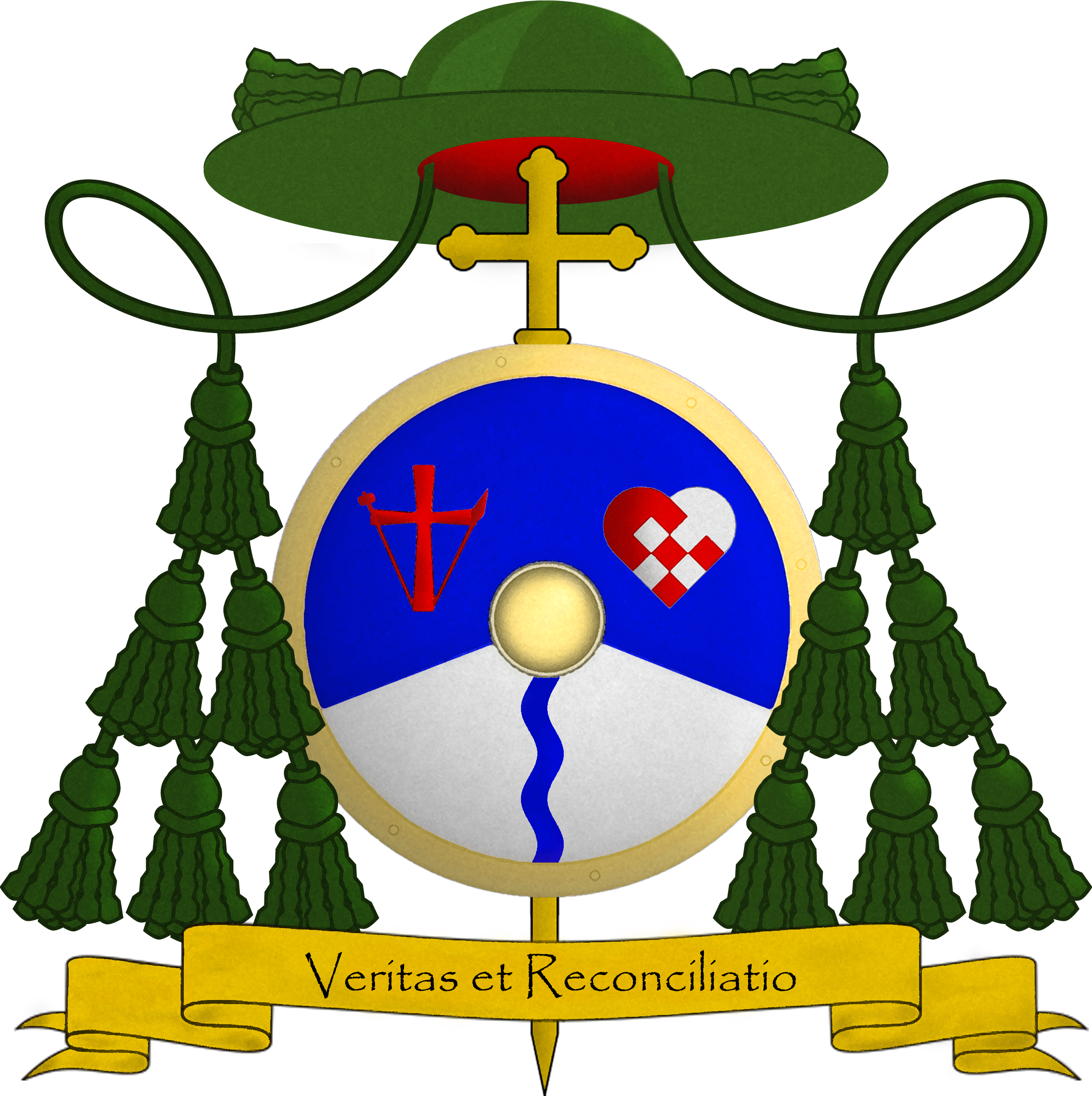
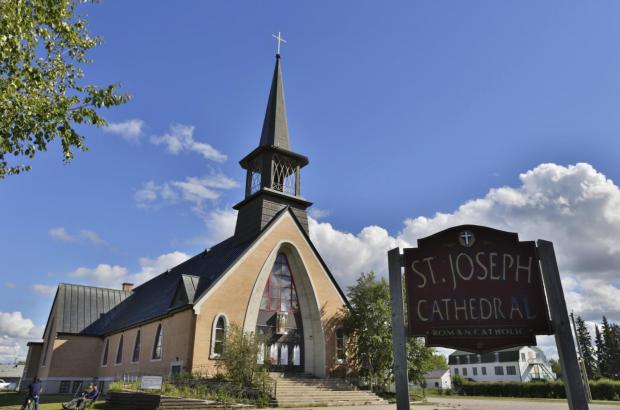
St. St. Joseph’s Cathedral in Fort Smith, Northwest Territories, holds a unique place in the spiritual and historical landscape of northern Canada. As the cathedral church of the Diocese of Mackenzie–Fort Smith, it is not merely a parish church but the seat of the bishop, a symbol of Catholic presence and pastoral care across one of the largest and most sparsely populated dioceses in the world.
From the outside, St. Joseph’s stands as a familiar landmark in the town of Fort Smith, a community long recognized as a hub in the southern part of the Northwest Territories. Its presence anchors the Catholic life of the region, offering a place of worship, sacramental life, and community gathering for Catholics from Fort Smith and surrounding areas. While the cathedral’s exact construction history is rooted in the early mission activity of the Church in the North, its significance today is tied as much to its role in diocesan identity as to its architectural form.
The cathedral’s dedication to St. Joseph resonates with its role as protector and guide, reflecting the missionary heritage of the Catholic Church in the Mackenzie region. Missionaries, often from the Oblates of Mary Immaculate and other religious congregations, ventured into the North’s vast and challenging terrain in the late nineteenth and early twentieth centuries, journeying by river, trail, and later by road, to bring the Gospel, sacraments, and pastoral care to Indigenous and settler communities alike. St. Joseph’s Cathedral stands as a continuation of that mission, sustaining the faith of local Catholics in a setting defined by great distances and strong community ties.
Within the cathedral’s walls, the rhythms of liturgical life unfold in the heart of the South Slave region. Masses, baptisms, weddings, funerals, and diocesan celebrations are moments when the local faithful gather not just as a parish but as part of a larger diocesan family. The cathedral thus functions as a spiritual home for people from diverse backgrounds—Indigenous and non-Indigenous—who find in its liturgy and community life a place to encounter Christ and one another.
St. Joseph’s also carries living connections to the history of Catholic missions in the North. Though detailed construction records are limited, accounts from church heritage sources note that foundational work on important cathedral structures in similar contexts involved community commitment and careful planning, reflecting the shared investment of clergy and laity in building places of worship that endure through time.
In recent years, St. Joseph’s has also witnessed broader social and cultural dialogues in Canada. Like many Catholic churches across the country, it has grappled with the legacy of colonialism and the Church’s historical involvement in Indigenous residential schools—an ongoing conversation marked by both challenge and opportunity for healing. Reports of community reactions to the cathedral, including incidents prompting reflection on this legacy, underscore how St. Joseph’s remains intertwined with contemporary issues facing the Church and northern communities alike.
Today, St. Joseph’s Cathedral continues to serve as the mother church of the Diocese of Mackenzie–Fort Smith, under the pastoral leadership of the Bishop. It stands not just as a building but as a living center of Catholic faith, witness, and service in one of Canada’s most remarkable and remote regions—a place where the enduring rhythms of prayer and community life meet the vastness of northern landscapes.
 Mackenzie-Fort Smith