The North Slave Region of the Diocese of Mackenzie–Fort Smith occupies a central place in the life of the diocese, both geographically and pastorally. Centered on the northern shores of Great Slave Lake and extending inland toward the barrenlands, this region includes some of the most diverse communities in the Northwest Territories. Marked by a blend of Indigenous tradition, northern urban life, and transitory populations, the North Slave Region reflects the evolving realities of the contemporary North while remaining deeply rooted in the land and its peoples.
Geographically, the North Slave Region includes Yellowknife, the territorial capital, along with surrounding Indigenous communities such as Dettah, Ndilǫ, and the Tłı̨chǫ communities of Behchokǫ̀, Whatì, Gamètì, and Wekweètì. These communities are connected by highways, winter roads, and air travel, with Great Slave Lake serving as a defining physical and cultural presence. The land ranges from boreal forest to exposed rock and tundra, shaping both daily life and pastoral ministry in ways that demand adaptability and resilience.
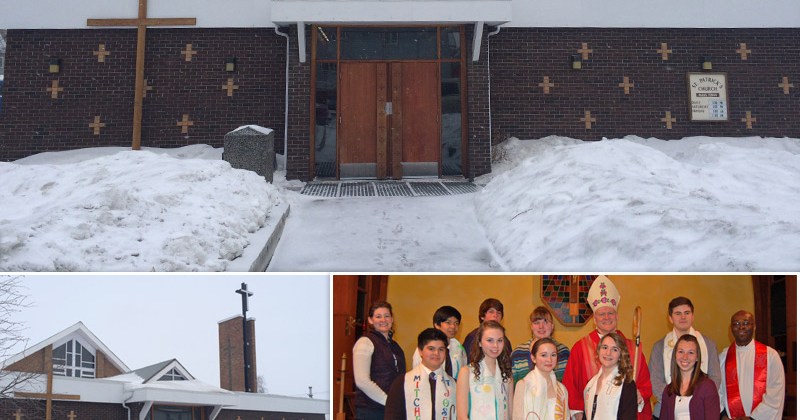
At the heart of the North Slave Region is St. Patrick’s Co-Cathedral in Yellowknife, which serves as one of the principal churches of the diocese alongside St. Joseph Cathedral in Fort Smith. As the seat of the territorial capital, Yellowknife draws people from across Canada and around the world for government, mining, education, and service. This has made the Catholic community in the city notably multicultural, encompassing Indigenous peoples, long-term northern residents, immigrants, and temporary workers. Parish life here includes regular sacramental celebrations, education, social outreach, and ecumenical and interfaith engagement.
The North Slave Region is home to several Indigenous nations, particularly the Yellowknives Dene First Nation and the Tłı̨chǫ Nation, each with strong cultural identities, languages, and systems of governance. For these communities, the land is inseparable from spiritual life. Catholic ministry in the region increasingly emphasizes accompaniment, listening, and respect for Indigenous spirituality and leadership, especially in light of the Church’s ongoing commitment to Truth and Reconciliation. Liturgies and pastoral gatherings often seek to honor local languages, symbols, and traditions, reflecting a Church learning to walk more humbly with the people it serves.
Pastoral ministry in the North Slave Region is shaped by both opportunity and challenge. While Yellowknife offers relatively stable parish structures and services, many surrounding communities are small and remote, requiring priests and pastoral workers to travel regularly to celebrate the sacraments and support local leaders. Lay ministry plays an essential role, sustaining faith communities between visits and ensuring that prayer, catechesis, and care for one another continue throughout the year.
Historically, the North Slave has been a place of encounter between Indigenous peoples and missionaries since the late nineteenth century. This history includes sincere pastoral dedication as well as painful experiences associated with colonialism and residential schools. Today, the Church in the North Slave Region seeks to face this legacy honestly, fostering healing, dialogue, and renewed relationships grounded in justice and mutual respect.
 Mackenzie-Fort Smith