His life reflects both the intellectual ambition of early missionary scholarship and the personal struggles that often accompanied life in the remote North.
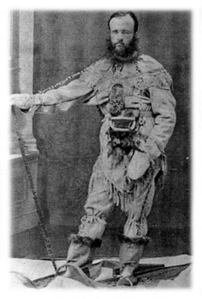
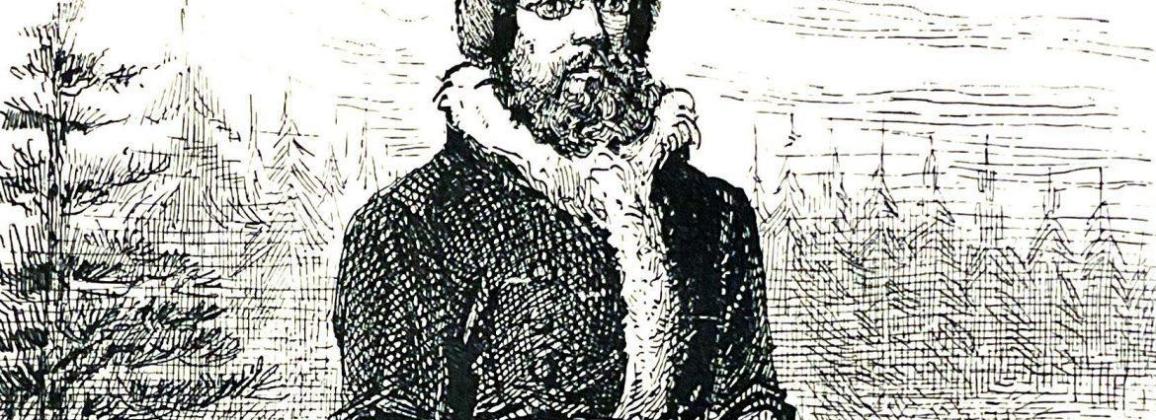
Father Émile Petitot was one of the most remarkable and complex figures among the Oblate missionaries who served in northern Canada in the nineteenth century. A priest of the Missionary Oblates of Mary Immaculate, he lived and worked for many years in Fort Good Hope along the Mackenzie River and left an enduring legacy as a missionary, artist, linguist, geographer, and ethnographer. His life reflects both the intellectual ambition of early missionary scholarship and the personal struggles that often accompanied life in the remote North.
Born in France in 1838, Émile Petitot joined the Oblates at a young age and was ordained to the priesthood in 1862. Soon after his ordination, he was sent to the Canadian Northwest, a vast and largely unmapped region from a European perspective. He arrived at Fort Good Hope in the mid-1860s, a time when the community was an important fur trade post and gathering place for Dene peoples of the Sahtu region. The mission there would become his primary home for many years.
As a missionary, Father Petitot carried out the usual pastoral duties of northern Oblates, including celebrating the sacraments, catechizing, and accompanying people in their daily lives. Travel was arduous and often dangerous, involving long journeys by river, canoe, snowshoe, and dog team. Like other missionaries of his era, he depended heavily on the knowledge, skills, and hospitality of Indigenous people to survive and to carry out his work.
Beyond his pastoral role, Petitot possessed an exceptional intellectual curiosity and artistic talent. He devoted himself to the study of Indigenous languages, particularly those of the Dene peoples, producing grammars, dictionaries, and extensive vocabularies. These works remain among the earliest systematic records of several northern languages and continue to be referenced by linguists and historians today. His writings also include detailed ethnographic observations, documenting social structures, spiritual beliefs, oral traditions, and daily life as he encountered them.
Petitot was also a prolific geographer and cartographer. At a time when much of the Canadian North was poorly understood by European scholars, he mapped large areas of the Mackenzie Valley and surrounding regions based on his own travels and on Indigenous geographic knowledge. His maps and reports were sent to scientific societies in Europe and contributed significantly to nineteenth-century understanding of northern Canada.
One of Petitot’s most visible and enduring contributions is found in the Church of Our Lady of Good Hope in Fort Good Hope. He was largely responsible for the church’s extraordinary interior decoration, painting murals, symbols, and decorative patterns that cover the walls, ceiling, and structural elements. The artwork blends traditional Christian imagery with motifs inspired by the northern landscape, including stars reminiscent of the Arctic night sky and natural forms drawn from the surrounding environment. This artistic achievement makes the church unique in Canada and reflects Petitot’s desire to express faith through beauty and imagination in a northern context.
Despite his talents, Father Petitot’s life was marked by deep personal struggles. He suffered from periods of mental illness, which affected his relationships with both church authorities and the communities he served. At times, his behaviour and writings caused concern, and he was eventually recalled to Europe. He died in France in 1916, largely removed from the northern world that had shaped him and to which he had devoted much of his life.
Today, Émile Petitot is remembered as a brilliant but troubled figure. His contributions to linguistics, ethnography, geography, and sacred art are immense and continue to shape understanding of the Dene peoples and the history of the Canadian North. At the same time, his life invites reflection on the human cost of missionary work in extreme conditions and on the complex legacy of missionary activity among Indigenous communities. In Fort Good Hope, his presence endures most vividly in the painted interior of Our Lady of Good Hope Church, a lasting testament to his creativity, devotion, and complicated humanity.
 Mackenzie-Fort Smith