Long before European contact, the region was inhabited by diverse Indigenous nations, including the Dene, Inuvialuit, and later Métis communities. These peoples developed complex systems of governance, spiritual traditions, and land stewardship suited to the northern environment. Seasonal mobility, extensive trade networks, and deep relationships with the land defined life in the North. European colonization did not begin with settlers displacing these societies but with outside powers seeking access to northern routes and resources.
European involvement intensified in the seventeenth and eighteenth centuries through the fur trade. The chartering of the Hudson’s Bay Company in 1670 brought much of the territory under commercial claim, though not under direct settlement. Trading posts were established along rivers and lakes, relying heavily on Indigenous knowledge and labour. These posts became the first permanent European presences, but Indigenous peoples remained the demographic and cultural majority. Colonial influence during this period was economic rather than territorial in the modern sense.
In the nineteenth century, Christian missionaries—Catholic and Anglican—expanded alongside the fur trade. Missions introduced new forms of education, health care, and religious life, while also advancing cultural and spiritual change. This period marked the beginning of more intrusive colonial structures, as missions often worked in tandem with emerging government authority. Still, European settlement remained sparse, and the North was governed at a distance.
A decisive shift occurred in 1870 when Rupert’s Land was transferred from the Hudson’s Bay Company to the Dominion of Canada. The Canadian government moved to assert sovereignty over the North, motivated by concerns over Arctic claims and natural resources. The North-West Mounted Police established posts to enforce Canadian law, and treaties were negotiated later than elsewhere in Canada. Treaty 8 in 1899 and Treaty 11 in 1921 opened much of the region to resource development, though Indigenous understandings of these agreements often differed significantly from those of the Crown.
The twentieth century saw the most disruptive effects of colonial settlement. Residential schools, administered by churches under federal policy, removed Indigenous children from their families and attempted to suppress Indigenous languages and cultures. At the same time, government policies encouraged or forced Indigenous peoples into permanent settlements, undermining traditional ways of life based on seasonal movement. Colonial settlement in the Northwest Territories thus took the form of social and administrative restructuring rather than population replacement.
Following the Second World War, resource development, military infrastructure, and expanding government administration led to modest population growth in towns such as Yellowknife. The designation of Yellowknife as the territorial capital in 1967 marked a new phase of political development, including the gradual decentralization of governance and greater local participation.
In recent decades, the history of colonial settlement has been increasingly challenged and reinterpreted through Indigenous political resurgence. Modern land-claim and self-government agreements, along with the creation of Nunavut in 1999, have reshaped the territorial landscape. Today, Indigenous peoples remain central to governance and culture in the Northwest Territories, and efforts toward reconciliation and renewed relationships continue.
The history of colonial settlement in the Northwest Territories is therefore not a story of mass settlement, but of layered control, adaptation, and resistance. It reveals a distinctive northern experience in which colonial power was real and consequential, yet never erased the enduring presence and leadership of Indigenous peoples.
Colonial settlement in the Northwest Territories today is often discussed in terms of its harms and unfinished injustices—and rightly so. Yet alongside these realities, contemporary life in the NWT also reveals genuine strengths that have emerged through contact, migration, and shared living. One of the most notable is the territory’s diversity and multicultural character, shaped not by mass settlement but by small-scale movement of people who come to live, work, and belong in the North.
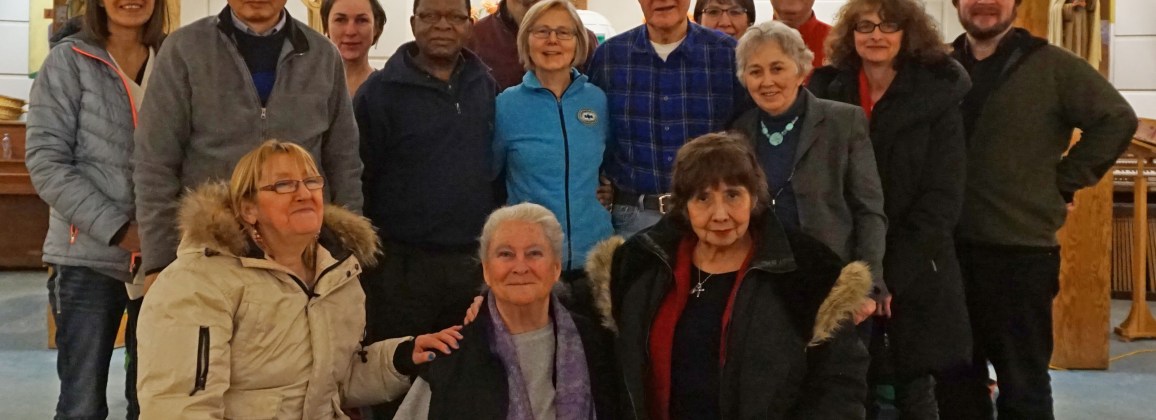
Unlike many parts of southern Canada, settlement in the NWT has brought people from across the country and around the world into close, everyday relationship with Indigenous peoples and with one another. Nurses from the Philippines, teachers from the Maritimes, engineers from Europe, tradespeople from the Prairies, clergy, artists, civil servants, and newcomers from Africa and Asia live alongside Dene, Inuvialuit, and Métis families whose roots go back thousands of years. In small northern communities, diversity is not abstract or anonymous—it is personal. People know one another, depend on one another, and share responsibility for the life of the community.
This reality has fostered a culture that is often remarkably welcoming. Many people who arrive in the North do so knowing they are guests on Indigenous lands, and this awareness can encourage humility and respect. Newcomers are often invited to community feasts, cultural events, on-the-land camps, and celebrations that reflect Indigenous traditions, while also bringing their own languages, foods, music, and customs into shared spaces. In places like Yellowknife, Hay River, Fort Smith, and Inuvik, it is not unusual to encounter a mix of Indigenous ceremonies, Christian worship, international festivals, and local traditions woven into daily life.
The North’s diversity has also enriched its public institutions and social imagination. Schools, parishes, health centres, and workplaces regularly navigate cultural difference, fostering skills of listening, adaptation, and cooperation. While not without tension, this environment can encourage people to think beyond rigid identities and to recognize dignity in difference. Many northerners speak of the territory as a place where people are known less by status or background and more by their willingness to contribute, show up, and care for others.
Importantly, multicultural life in the NWT does not erase Indigenous presence; rather, at its best, it exists alongside a growing recognition of Indigenous leadership and rights. Modern treaties, self-government agreements, and cultural resurgence mean that diversity today is increasingly shaped by Indigenous voices setting the terms of relationship. This creates the possibility of a society that is not simply “settler multiculturalism,” but a more grounded and ethical sharing of space—one that acknowledges history while seeking a more just future.
In this way, the Northwest Territories offers a distinctive example of how diversity and welcome can flourish even in a context marked by colonial history. The North shows that small populations, shared challenges, and proximity to the land can create conditions where people from many backgrounds learn to live together with respect. While much healing and change remain necessary, the everyday reality of multicultural life in the NWT stands as a quiet but meaningful good—one rooted in hospitality, mutual dependence, and the ongoing effort to live well together.
 Mackenzie-Fort Smith