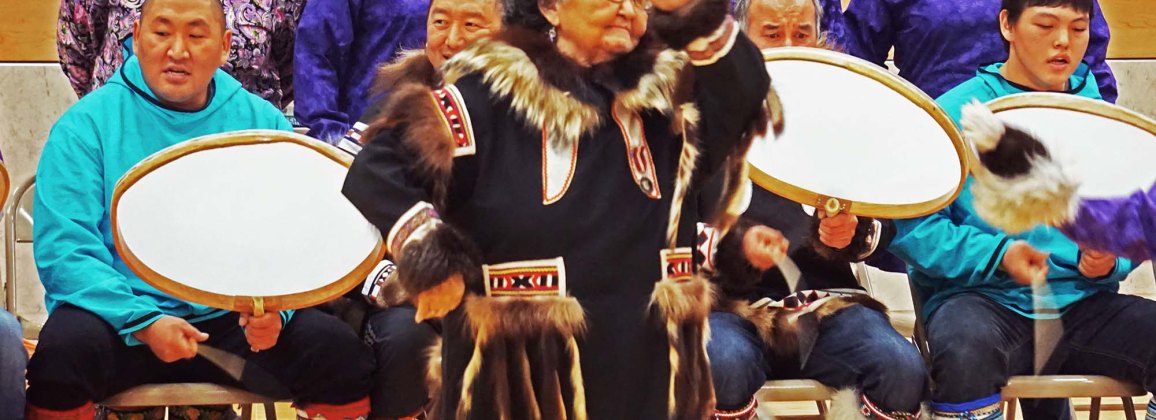
The Inuvialuit are the Inuit people of the western Canadian Arctic, with a homeland known as the Inuvialuit Settlement Region, which stretches across the western Arctic coast and includes the Mackenzie Delta, the Beaufort Sea coast, and communities on Banks and Victoria Islands. Their presence in this region extends back thousands of years, rooted in a deep relationship with the land, sea, ice, and wildlife that sustain life in the Arctic.
Traditionally, Inuvialuit life was organized around seasonal cycles of hunting, fishing, and travel. Marine mammals such as seals and whales, along with caribou, fish, and birds, were central to their diet, culture, and spirituality. Knowledge of sea ice, weather patterns, and animal behaviour was carefully passed down through generations, forming a sophisticated system of survival and stewardship uniquely adapted to the Arctic environment. Social life emphasized cooperation, sharing, and strong family and kinship networks, values that continue to shape Inuvialuit communities today.
Contact with European explorers, whalers, and missionaries in the nineteenth century brought profound change. While trade introduced new materials and technologies, it also led to disease, economic disruption, and cultural pressures. Despite these challenges, the Inuvialuit maintained their identity and adapted in ways that allowed their culture to endure. The twentieth century saw further transformation with settlement life, residential schooling, and increased government presence, experiences that left lasting impacts but also strengthened contemporary efforts toward cultural renewal.
A defining moment in modern Inuvialuit history was the signing of the Inuvialuit Final Agreement in 1984, Canada’s first comprehensive land claim settlement. This agreement affirmed Inuvialuit rights to land, resources, and self-determination, and established institutions to support economic development, environmental protection, and cultural preservation. Today, Inuvialuit communities continue to balance tradition and modern life, drawing on ancestral knowledge while engaging in education, governance, and economic initiatives.
The Inuvialuit story is one of resilience and continuity. Grounded in the Arctic landscape and sustained by strong cultural values, the Inuvialuit people continue to shape the western Canadian Arctic, offering a living witness to the enduring connection between people, place, and heritage.
 Mackenzie-Fort Smith